Flowerdeck
FlowerDeck is a collection game for iPhone. Use your phone to take pictures of flowers and the app will identify them and create unique cards to build your deck. Collect more points by learning the bonus system. Earn secret achievement badges and compete on the global leaderboard. FlowerDeck can identify flowers from all over the world, from common wildflowers to the most rare orchids. But every flower is an opportunity to build your collection. From your garden, to your neighborhood, to exotic gardens when you’re on vacation, this app will have to spotting flowers in the wild and identifying local species.


FAQs
What if the color of a flower is ambiguous?
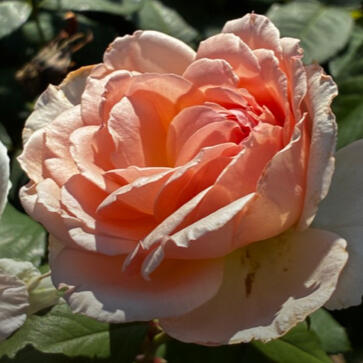
FlowerDeck allows the user to select—either via the magnifier, or even just by typing—the color of a petal because color is itself very subjective. What color is this rose? I think it would be fair to code this as pink (which I chose to do), but I also think scoring it as orange would be fair (as it looks peach, and peach is a form of orange.) Depending on your goals, you may choose to lean one way when selecting a color—scoring something as grey when you could also fairly code it as purple or blue—in order to collect more of that particular color.
Privacy
FlowerDeck uses Firebase Analytics to better understand its user base and improve the app; it does not share data across apps or with third parties, and is not used for any form of advertising. We are interested in these analytics to make sure there is a broad range of badge difficulty regardless of where users live across the planet, given plant diversity. Any usage data is not linked to you, the user, and is not tied to your personal information. FlowerDeck’s plant identification API involves you sending your photo for identification to the API, but that photo is not stored by either the plant identification API or FlowerDeck. The API logs the date and time of the query in order to monitor the number of times the app has queried the API, and FlowerDeck's analytics do log what species you collected, but your actual photos are not collected by anyone other than you. If you chose to link to Apple’s Game Center or Google Play Games Services in order to compete on the leaderboard, those entities collect their own data under their respective privacy policies.
Additional FAQs
When should I add a second color and when shouldn’t I?
It is only fair to add a second color if the flower truly is dual-colored. Here are some examples.
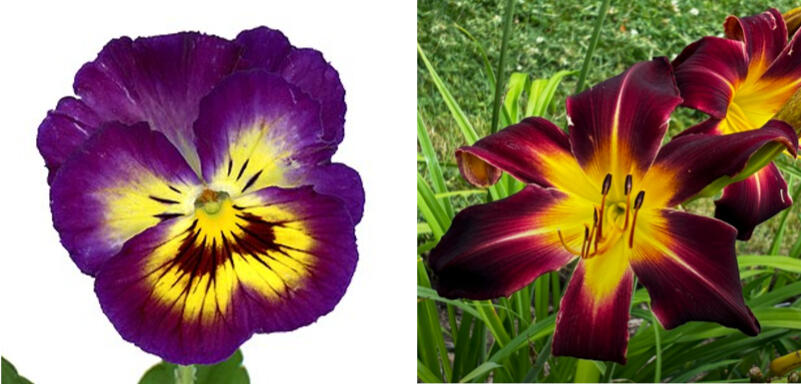
This pansy should be scored as purple and yellow (order doesn’t matter) and the lily can be scored as yellow and brown, red, or purple, depending on how you see that darker color.
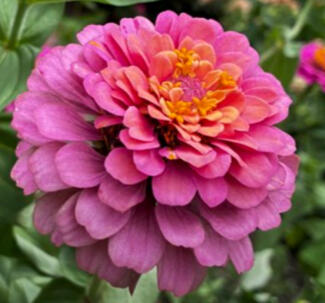
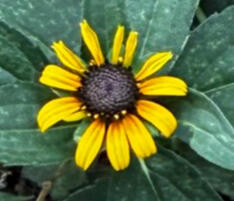
I would not code any of the following flowers as dual-colored. This zinnia should be coded as pink or purple because that is the primary color overwhelmingly. I would not add a second color of orange. This Brown-eyed Susan should be coded as yellow only, as only the petals count.
Why can't a flower have more than 2 colors?
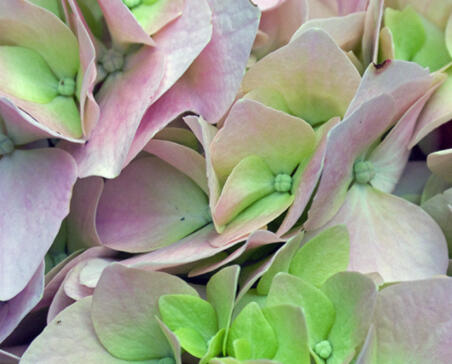
Clearly there are flowers that have more than two petal colors, for example, this stunning hydrangea. The reason I’ve limited colors to 2 is to throttle down the number of points a little, as color can radically alter a card's score. This flower could fairly be coded as green, pink, purple, or even grey.
What if I'm not sure if something is a flower?
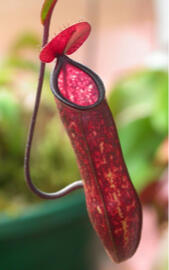
Technically, it is the color of the flower petals that should award the flower color. However, in some cases, users may be unsure if what they are looking at actually is a flower. For example, I encountered several species of pitcher plants like this Nepenthes muluensis. While the app was able to identify this plant, I did not yet create a card, but instead took the name provided by the app and looked up the species. I was able to determine that this is not actually a flower, but a specially shaped leaf, used to tray prey.
Can one plant be used to make more than one card?
Of course. Even a single flower might have a cycle where you could capture it as green and then another color. A single hydrangea plant could produce flowers that are green, purple, blue, pink, or grey possibly even at the same time.
Why can't I delete cards?
This creates a bit of nightmare in terms of tracking points and bonuses. The ephemeral nature of flowers is fleeting: you had your chance once and then it’s gone. As such, a card is a capture of a moment, even if less than perfect.
How is the base value of a flower determined?
I do not want rarity—which is what base value scoring comes from—to be a primary factor in points generation, which is why the other means of achieving points are more heavily weighed. The initial thought was that flowers that are very hard to come by will score more points, but this becomes difficult when you consider that what is rare in one geographic area is common in another. 1 point is for common “everyday” flowers you might easily come across in lawns, gardens, or on the side of the road. 2 points is for flowers that are less common and need a a bit more care to stay alive. The "rare" group (3 points) contains flowers that are geographically hard to come by because of where or how they grow, or might require a trip to a botanical garden. The “very rare” group (5 points) includes some endangered species, or flowers that grow in highly specific locations (ie, in one particular cloud forest.) The rare group does contains some endangered species as well, but ones that you are more likely to come across because they are cultivated. If a plant hasn’t specifically been added to my “rare” lists, it defaults to “common” (1 point)—this might feel egregious if you have collected a particularly rare flower, but once you use the app for a while, you will see that while you can get 5 points on a ghost orchid, you could get 110 on a common marigold through other bonus systems. Collecting particularly desirable flowers is also rewarded via badges.
Who makes your artwork?
All of the artwork in FlowerDeck is made by humans, not AI.
When is the next badge drop?
Probably early 2027.
What if I got a weird error message?
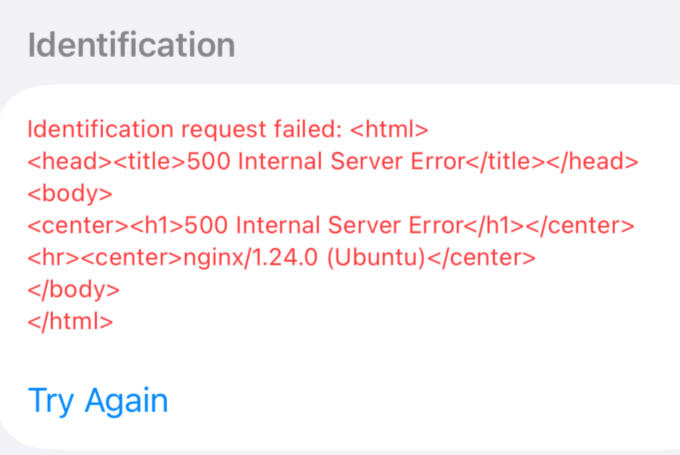
The above message is actually an error being returned from the plant identification API that FlowerDeck uses (ie, it isn't something FlowerDeck has control over.) Typically it is a server outage which should resolve shortly.